If you have ever wondered what is happening when you adjust your thermostat, you're not alone. Your HVAC system is one of the hardest working parts of your home, quietly managing temperature and air quality every day. Understanding how it works can help you spot problems early, make smarter decisions about repairs and get more value out of regular service.
Below, we break down how an HVAC system works from start to finish, answer the most common questions homeowners ask and explain when it's time to call a professional.
What Does HVAC Stand For?
HVAC stands for Heating, Ventilation and Air Conditioning. The term describes the full system responsible for regulating the temperature, humidity and air quality inside your home or building. While people often think of heating and cooling as separate systems, a modern HVAC setup typically handles both functions through a shared network of ducts and components.
What Are the Main Components of an HVAC System?
An HVAC system is made up of several key components that work together as a single unit. Each part plays a specific role in moving, heating or cooling air throughout your home.
The furnace is the indoor unit responsible for pushing conditioned air through your ductwork. In heating mode, the furnace burns fuel or uses electric heating elements to warm the air before distributing it.
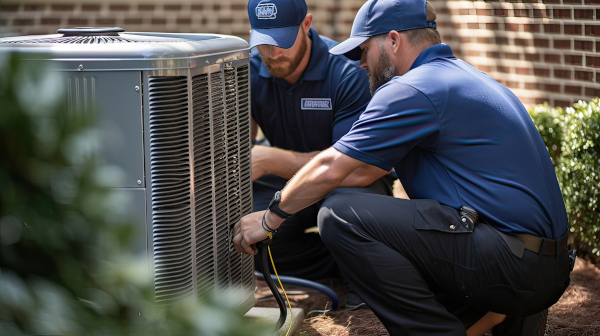
The air conditioner serves as the outdoor unit. When cooling, it removes heat from indoor air and releases it outside.
Outside of the major units, there are components inside that play a major role in heating/cooling your home. A heat pump can reverse this process in winter, pulling heat from the outdoor air and bringing it inside. Evaporator Coils sit inside the air handler or furnace. It absorbs heat from the indoor air during cooling, allowing refrigerant to carry that heat away. There's also the condenser coil in the outdoor unit and releases the heat that the refrigerant carried from inside your home. The refrigerant is the fluid that circulates between the indoor and outdoor units, absorbing and releasing heat as it changes between liquid and gas states. Ductwork is the system of channels that carries conditioned air from your HVAC unit to every room in your home and returns it back to reconditioning. Finally, the thermostat is the control center that reads your home's temperature and signals the system to heat or cool as needed.
How Does an Air Conditioner Actually Cool Your Home?
Air conditioning works through a process called heat transfer. This means it's not done by creating cold air, but by removing warm air from your living space.
Here's the basic cycle. Warm air from inside your home is pulled through a return vent and passes over the evaporator coil. The refrigerant inside that coil absorbs the heat from the air, causing the air temperature to drop. The now-cooled air is pushed back into your home through supply vents. Meanwhile, the refrigerant, now carrying that absorbed heat, travels to the outdoor condenser unit. There, a fan blows over the condenser coil and releases the heat into the outside air. The refrigerant cools back down and returns indoors to repeat the cycle.
This loop runs continuously until your thermostat registers that your home has reached the desired temperature.
How Does an HVAC System Heat a Home?
Heating works differently depending on whether your system uses a furnace or a heat pump.
A gas furnace burns natural gas or propane to produce heat. That heat warms a component called the heat exchanger. Then a blower fan pushes air across the heat exchanger before distributing it through your ducts. A heat pump takes a different approach. Instead of generating heat, it extracts heat energy from the outdoor air and moves it inside, even on cool days. This makes heat pumps highly efficient in mild climates. In very cold weather, most heat pump systems include a backup heating element to supplement when outdoor temperatures drop too low.
Why Does Regular HVAC Maintenance Matter?
Every component in an HVAC system depends on the others to function correctly. When one part begins to fail or loses efficiency, it puts added strain on the rest of the system. Routine HVAC maintenance catches small issues before they become expensive repairs and helps your system run at peak efficiency all year long.
During a maintenance visit, a technician will inspect and clean the evaporator and condenser coils, check refrigerant levels, lubricate moving parts, test electrical connections, replace air filters and verify that the thermostat is calibrated correctly. Skipping annual maintenance is one of the most common reasons HVAC systems fail prematurely.
Generally, air conditioning systems should be serviced in the spring before cooling season, and heating systems should be serviced in the fall before the first cold snap.
What Are the Signs That Your HVAC System Needs Repair?
Catching a problem early almost always costs less than waiting for a full breakdown. Watch these warning signs.
There are certain signs you'll want to look out for. These include:
- ✓Reduced airflow
- ✓Unusual sounds
- ✓Warm air blowing from AC vents
- ✓Short cycling
- ✓Higher than usual utility bills
- ✓Visible ice
If you notice any of these issues, scheduling an AC repair appointment can prevent a minor issue from turning into a full system replacement.
How Can You Improve the Efficiency of Your HVAC System?
You don't have to replace your entire system to see meaningful efficiency gains. A few straightforward steps can make a real difference:
- ✓Replace air filter every 3 months
- ✓Fix leaky ductwork
- ✓Keep area around the outside AC unit clear of debris
- ✓Program thermostat when you're not home
- ✓Have professional tune-ups
Ready to Service, Repair or Replace Your HVAC System?
Bud's Heating and Air has been serving the Sierra Foothills and Central Valley for over 20 years. Whether you need a routine tune-up, an emergency repair or a full system replacement, our team brings honest pricing and craftsmanship to every job. Explore our AC installation and repair services or learn more about our HVAC maintenance plans to get started.
Want a professional set of eyes on your system?
We're your neighbors, and we're happy to help. Give Bud's team a call.
📞 (209) 857-0438